Categories
Business Case

Is the EWR Central Section a Boondoggle? A Sanity Check on its Business Case.

Whatever you think of the Nobel prize winning economist Milton Friedman, he did make some really interesting points. For example, he proposed that spending should be categorized according to a 2 by 2 box as follows[1]:

You are the Spender On Whom SpentOn Whom Spent
Whose MoneyYouSomeone Else
Yours12
Someone else’s34
Milton Friedman’s Spending Categories 1-4

He then goes on to give many examples of how category 1 spending is often performed much more efficiently than the other categories especially category 4. Category 4 spending can often result in a Boondoggle. This is defined by Wikipedia as “a project that is considered a waste of both time and money, yet is often continued due to extraneous policy or political motivations.”

The East West Railway Central Section (EWR CS) is definitely category 4 spending. Let’s see what we might think of it, if it were category 1.

The estimated total cost of the EWR CS rose from £1.9Bn[2] for option A in the January 2019 consultation to £5.6Bn[3] for the chosen option E in January 2020. That’s an increase of 295%. Little or no explanation of this increase is given in the EWR Preferred Option Report and shame on me for not questioning it. But hey, it’s someone else’s money, right?

Well, the government either pays for it out of taxation in which case we all pay for it now, or adds to the peacetime record £2 trillion public debt and our children or grandchildren pay for it. Another option is that we have a period of high inflation in which case, well we all pay for it. There is no escape from the cost and, since south Cambridgeshire is quite a wealthy area, we can expect to pay more than pro-rata of the UK population.

How much do we pay each? Well, there are public works going on all over the UK, so let’s generously attribute this to the to the population of the Oxford Cambridge Arc which is currently 3.7 million people. Let’s further assume that only half of these live in the Bedford to Cambridge section. Taking an average of 2.5 people per household then we are looking at a bill of 2 x 2.5 x 5.6e9 / 3.7e6 = £7,568 per household. Ouch! If you had the choice, would your household spend this on the railway?

The railway is being optimised for long distance trips rather than lots of stations to support commuting. I have been in the Cambridge area since the 1980s and I have been to beautiful Oxford 3 times, once by bus, once on the way back from a holiday in Wales and once by car. Milton Keynes, well, I’ve been to Ikea, but I needed to take the car to bring back the furniture. Bedford, Bicester, St. Neots, Aylesbury etc, sorry never been there.

I have worked in the Cambridge Tech sector for decades, travelled all around the world, but latterly found that much of the collaboration was by digital means. Am I typical? Well let’s look at the 2014 Atkins report which was one of the early studies underlying the East West Railway. Under the section “evidence-based conclusions” we find: 

“Poor east-west orbital connectivity in is apparent in long journey times by both rail and car and is also reflected in the very low demand at present between locations on this arc;”

This is a curious statement. They found evidence for poor demand and assumed that if they built an expressway and an east west railway then demand would grow. Probably true, but would it grow enough to pay for the costs? Atkins are a large consulting company are they at all conflicted in making an assessment for the case for the East West Railway? Anyway, it looks like a high-risk assumption to me. But hey, it’s not my money, right?

Even a back of fag packet calculation shows there’s a problem.

From https://cambridgeshireinsight.org.uk/economy/ there are very roughly 250,000 people in Cambridgeshire and Peterborough in classes of occupation who may be considered to do a lot of business travel (managers, directors and senior officials, professional occupations, assoc. prof. and tech occupations, sales and customer services from Occupation Type table).

Very generously, guess that 10% of these people would travel to Oxford or Milton Keynes etc once a month on average. This equates to a total of 25,000 trips per month (each way). 

Number of trains per month at say 4 trains an hour for 8 hours each way = 4x8x30 = 960, say 1,000 trains per month

Number of business people per train = 25.

OK there are some people travelling for leisure and other reasons as well and it doesn’t allow for potential growth over 100 years, but given that an 8-car train can take about 400 people and even if the demand calculations are out by a factor of 2, there is still a problem for such a line. 

At the very least the EWR CS should be delayed until the demand is properly estimated and publicised in a more stable economic climate (post pandemic and post Brexit).

Another piece of evidence can be found in this diagram in the National Infrastructure Commission report on the Oxford Cambridge Arc.

Figure 9 of NIC Report Partnering for Prosperity

This diagram shows the strong demand for commuting around all the cities in the Arc. It does not demonstrate demand for travel from end to end. Meeting commuter demand is linked to supporting housing growth which is an objective of the NIC report for the development of the Arc. 

There are cheaper ways to meet commuter demand than a heavy railway such as the EWR CS. What about busways, trams and a local light railway such as the proposed Cambridge Metro?

So that you can see the disconnect in thinking here, let’s have a look at what the EWR Co.’s route option report says about the business case for the Option E decision.

“1.19  EWR Co’s analysis has concluded that when looking across these five key criteria Route E is most likely to deliver against the strategic objectives for EWR and provide the best overall value for money from government’s investment in the railway.”

There is an imagination failure. Where is the comparison with the counterfactual, do nothing assumption? Where is the comparison with other solutions to meet the need to support commuters/housing development?

Given the current (lack of) evidence presented for the EWR CS by government, it looks like a Boondoggle to me and I’d rather my £7,568 was spent on something else.


[1] Milton Friedman “Free to Choose” 1980, p.146

[2] EWR Bedford to Cambridge Route Option Consultation Technical Report January 2019 §9.1, Table 3, p.40

[3] EWR Bedford to Cambridge Preferred Route Option Report January 2020  §15.13, Table 15.4, p.100

Categories
news

Cambridge Approaches Working Group Current Objectives

These posters are starting to appear in the Option E area, get in touch if you want one.

It’s been a while since we reviewed the Cambridge Approaches objectives so we felt it was time for an update – here it is.

If there is a case for the East West Railway, we support the route going through a new Cambourne North Station rather than Cambourne South and will continue to make the case for that with stakeholders. In this we are supporting our local MP, the Mayor of the Combined Authority and members of the Local District Council. We call on EWR not to ignore the combined weight of this opinion and the voice of the parishes. 

Whichever stops are chosen for the railway, we believe that EWR should consult on the variety of options that it could take through Cambourne North; especially as this is a new location not previously considered or discussed.

Until we have further facts, we remain to be convinced about the case for the East West Railway so the consultation needs to cover all the unresolved issues. For example, the business case is poor and not clearly justified; there is no alignment with the local plan from SCDC and other local authorities; it does not make enough use of multi-modal corridors; it may affect our food security; it causes unnecessary environmental damage and planning blight dividing communities in the process. 

We are conscious that some very important decisions were made before the first consultation (now some two years ago) on the need for the railway and its approach to Cambridge and these have not been properly justified or back checked.  In particular the co-ordination with other transport initiatives such as the Metro to meet commuter demand is not evident; there is little mention of freight – indeed the story of freight resembles that of Schrodinger’s cat. We will continue to research and question EWR Co. and others on these and any other significant points that arise.

Cambridge Approaches continues to make local people aware of the impending threat to the Option E area and to seek means to reduce or ideally eliminate the impact of the railway on residents and the environment. There is no ideal answer, so we will not elaborate further on alternative route options nor will we try to broker compromises between affected parties – that is EWR Co.’s job and for them to justify the route chosen. However, we will advise on facts if you have a specific question. 

Cambridge Approaches Working Group October 2020

Categories
news

District Councillor Supports Cambourne North

A prominent Lib. Dem. District Councillor for the Harston and Comberton Ward (representing the parishes of Barton, Comberton, Coton, Grantchester, Harlton, Harston, Haslingfield, Hauxton, South Trumpington) and recent, narrowly defeated MP candidate has come out supporting a Cambourne North Station for the East West Railway. This is not a party political issue, but it is good to see cross-party support for this. Here is Ian Sollom’s statement:

“An EWR route via Cambourne is undoubtedly right for South Cambs, but in the coming consultation we need to see more options than we saw in the previous one, which had a station only on the south side of Cambourne, and suggested only a single route corridor from there into Cambridge.
A well designed and well-placed station to the north side of Cambourne has the potential to be transformative for the community, while a route from there into Cambridge North could be a much better fit for future local development. Both of these options should be included in EWR’s next consultation so the people of South Cambs can have their say on these alternatives.”

So we now have Anthony Browne MP, Mayor James Palmer, Councillor Ian Sollom, the Cambridge Approaches Oversight Group vote from 12 parishes and Cambourne Town Council amongst many others all asking EWR Co. to put a Cambourne North Station into their next Consultation. We have also now heard verbally from EWR Co.’s Will Gallagher and Ian Parker that they are looking closely at a Cambourne North option for the next consultation.

If a Cambourne North route does appear in the next consultation, it seems likely to be popular with all the politicians.

It is also good to see some press coverage of Anthony Browne’s call for a Cambourne North Station in the Cambridge Independent including comment from EWR Co. that they are looking at a Cambourne North Station. The EWR Co. spokeperson said “We are exploring the option for a station in the north of Cambourne as we continue to develop route alignment options, prior to consulting the public early next year.”

Categories
news

Logging EWR Survey Activity

You may have noticed an increased level of activity in the area proposed for East West Rail to come from Cambourne to Cambridge South. Survey teams from Arup or EWR Co. looking  at the fields, the wildlife and the general environment as a preparation for a new railway line through our countryside. 

We have an interactive map that shows survey requests received by landowners but this may now be out of date. Please would you be so kind to look at it and see if your are aware of survey locations not on the map. Be aware of a potential GDPR issue here, so it is better to report on your own land rather than others, but also to report on anything seen on public roads / rights of way. 

So, if your land is being surveyed, you have received a request for a survey or you see a survey team on a public highway / right of way that is not recorded please could you update the map?

To add a survey location and label to the map click the add marker icon (a grey balloon shaped icon) under the search box on the map, click the location of the survey and then label it.

This is important as it allows us to have information from which we can detect lines of activity and inform your parish accordingly. 

Handling Survey Requests

We are currently reviewing the pros and cons of accepting survey requests.

Categories
news

MP Calls for North Cambourne Station Consultation

We really welcome following press release from Anthony Browne supporting a Cambourne North Station for the East West Railway. This position was also the most popular option that came out of the Cambridge Approaches oversight group in a series of seven meetings leading up to the one held on the 8th October. This was attended by Anthony Browne MP, Will Gallagher of East West Rail, Aidan Van De Weyer Deputy Leader of South Cambridgeshire District Council and representatives from the parishes from Bourn to Great Shelford. Cambridge Approaches called on East West Rail to include a Cambourne North route in their next consultation expected in January 2021.

In a recent meeting between the CA working group and Mayor James Palmer he told us that he also supports a Cambourne North station for East West Rail.

A Cambourne North station implies a route similar to the example set out in this post from Cambridge Approaches and has a profound impact on the routing of the railway at it approaches Cambridge. We stress that the CA route is just an example and there is considerable more detailed work to do in threading the route through the various constraints between Cambourne North and Cambridge South.

The MPs press release follows:

“Anthony Browne, MP for South Cambridgeshire, has welcomed news that East-West Rail (EWR) is considering a station to the north of Cambourne and is calling for the option to be included in any future consultation. 

As part of a meeting between EWR and local Parish Councillors, chaired and organised by Mr Browne, officials confirmed that the possibility of a railway station to the north of Cambourne was under active consideration. 

Mr Browne worked towards securing a northern option as part of his general election campaign and has written to the Secretary of State for Transport on this issue. He is continuing to arrange high-level meetings between senior EWR planners and local representatives.

Twenty-eight Parish Councils were represented at the meeting, which was addressed by the EWR Director of Strategy Will Gallagher, with Program Delivery Director Ian Parker taking questions on the design and implementation of the railway. Ashton Cull, Senior Policy Advisor to Combined Authority Mayor James Palmer was also in attendance. 

Several other local concerns were also raised during the meeting, including early electrification of the railway, potential timetabling issues and the environmental impact of the scheme. 

Mr Browne commented: “East-West Rail is clearly listening to local opinion and I am delighted to hear they are considering a station north of Cambourne. I’m now calling on them to include any such option as part of a future public consultation. 

“I believe there is a very powerful case for a station to the north of Cambourne, where it will avoid many much-loved areas of natural beauty and will provide better connections with other transport links, such as the A428.

“We need better public transport links through South Cambridgeshire, but it is important that any engagement is wide-ranging, transparent and happens as early on in this process as is possible. Residents have the right to know what they can expect from this project.”

Categories
Business Case

Does the EWR Co. Option E Decision meet its Own Assessment Criteria?

The EWR Co. assessment is based on these 4 principles taken from page 7 of their document Connecting Communities: The Preferred Route Option between Bedford and Cambridge Executive Summary:

“• Creating connections: not just laying down steel and concrete, we are focused on designing a railway that is most likely to create connections between local communities that will support the economic growth and prosperity in the area 

• Rooted in community: at a very early stage in the design of the route between Bedford and Cambridge, we consulted local communities, asking for comments and points of view on the new route. The responses were central to the way we made our decision, and means the Preferred Route Option is fundamentally grounded in feedback from the community, stakeholders and local authorities.

• Environment at the forefront: we developed route options with environmental considerations at the forefront. Rather than being an after-thought, we used environmental data as a fundamental part of our decision-making process. Our communities can have confidence that the Preferred Route Option has been selected to support ambitions for East West Rail to increase biodiversity and acting in a way which respects important environmental and heritage sites in the local area 

• Cutting-edge techniques to develop cost estimates: taxpayers must have confidence in our ability to manage the financial side of the project and deliver value for money. To reduce the risk of cost over-runs later in the project, we used cutting edge techniques and new digital technology to produce our indicative cost estimates. Whilst there remains significant uncertainty in these cost estimates, these innovative techniques will help us to continue refining and improving our estimates, supporting better decision making now, and pointing to opportunities for potential cost savings in the future”

Three  of the five options assessed by EWR Co. went through Bassingbourn and were challenged by CBRR (Cambridge Bedford Rail Road) and Cambourne was chosen as an intermediate stop instead of Bassingbourn. We now wish to analyse that decision using the same 4 principles and the Treasury target for SCBA (Social Cost Benefit Analysis).   

We now wish to analysis the Option E based on these 5 principles :-

  • Creating Connections:
    • Passengers 
      • The volume of traffic between Cambridge and Bedford has not been proven
      • The local movements are no doubt demonstrable given local traffic issues in Cambridge and local stops (with or without passing points) are not in the initial build. So we need an analysis of a phase 2 – the inclusion of local stops. But in that case a light rail solution such as the Cambridge Autonomous Metro will be more cost effective.
      • Cambridge East (Cambridge Airport and Fulbourn) is not included.
    • Freight
      • The existing line from Cambridge onwards to Felixstowe is old, single track and has many level crossings.
      • Freight levels have not been identified in the reports to date despite planned increases to Felixstowe docks
      • Freight would have to pass through Cambridge to Ely under current published plans, probably at night.
    • Technologies
      • The proposed route passes through rural countryside – not past science parks 
      • The railway line does not connect with the expansion of Cambridge University in North West Cambridge where it has built both academic facilities and accommodation facilities 
      • The trains are planning to be diesel – hardly the latest technology.

The result is that the connections have been attempted but they are not the most efficient and neither maximise connectivity nor do they maximise or support local prosperity growth.

  • Rooted in the Community:
    • The local plan for the 3 boroughs of South Cambridgeshire, Cambridge City and East Cambridgeshire have not been followed despite an explicit plea to do so in the South Cambs consultation response and as evidenced by EWRCo.’s proposal for a station near Caxton to serve Cambourne.
    • The weightings of the various stakeholders have not been revealed
    • We have been told that certain villages would be in favour of a Northern Route into Cambridge – these villages/communities in North Cambridge were not, as far as we are aware, consulted. 
    • It is inevitable that rural communities in Cambridgeshire will be divided by the railway line –  this is unnecessary in a county that is planning to develop new villages and towns; these new communities could be developed around stopping points on the new line and be less divisive 

The result is that the decision has not been rooted in the Community and will create more disruption than is necessary.

  • Environment at the Forefront:
    • The area of Option E has been left as a green area between Cambridge and the gradual expansion of London northwards. This area that has been carefully preserved, will now be divided by putting the proposed line in the area currently identified.
    • The environment of the rural villages will be changed forever whatever the mitigation.
    • The animal life will be disturbed more than is necessary
    • A railway line that follows transport corridors would minimise the impact – this has not been attempted
    • Freight trains will go through the middle of Cambridge and possibly all night

The result is a route designed to create maximum environmental impact to rural and town communities.

  • Cutting Edge Techniques:
    • The new railway line will last 150 years; planning should work on this basis. 
    • There is no assessment of the impact of local stations that we assume would come in phase 2 with local stops at intermediate stations, nor an assessment of its impact on light rail solutions such as CAM.
    • The plan should allow for the most direct route for freight along planned transport corridors – that has been achieved in part.  But where is the assessment of completing the A428/A14 transport corridor?
    • Modern techniques will allow us to follow the corridor and hence minimise community, environmental and commercial dislocations 

To date cutting edge techniques have not been used to predict the cost benefits ratios; wider community consultation should be undertaken now.

  • Social Cost Benefit Analysis (SCBA):

Because quantitative assessment of land use changes is not included in the justification of the current decision between route options A to E or indeed routes to the north of Cambridge, the EWR Co. decision  is not soundly made based on the data presented in their Option Report.

We believe that the current justification under SCBA depends on increase in property values; however, as the basis is unknown, it is not possible to compare the decision route with the alternatives. 

We strongly believe that alignment with the Local Plan(s) will create greater value in a shorter time frame. We are not alone in thinking this, a key stakeholder, South Cambridgeshire district council said the following in their consultation response:

Uncertainty regarding growth implications of consultation.
Further to the above however, we note in the strategic objectives that the most significant relates to supporting growth, and that the business case for the railway is predicated upon such growth. We note from the consultation and other evidence that there is very significant uncertainty as to the scale of growth envisaged around potential station locations. Evidence sources and modelling assumptions referenced vary greatly, and the only certainty seems to be that the implied growth above and beyond current Local Plan commitments would be substantial.”

In addition, over a 150 year period, that should be used for analysis of a project of this sort, the impact of ongoing benefits will outweigh any additional cost of putting the proposed new railway line in the right place to minimise operating costs over its whole life and optimise benefits to the community.  

Summary

We call for a much closer co-ordination between EWR Co, the district and county councils to come up with a more complete business case. This will either prove the existing case or it may reach very different conclusions about the best route. Perhaps there is a role for a senior politician to co-ordinate the views of the parties and reach a considered opinion based on all the facts and report publicly as part of the consultation.

Categories
news

EWR Impact on Farming and UK Food Security

We received the following input from Edd Banks a local farmer in the option E area. His also chairman of the National Farmers Union (Cambridge branch).

“The EWR proposal will have a great impact on many different parts of our community, but one part that will be hit hard is the agricultural sector. Cambridgeshire is the bread basket of England with just over 50% of the all the wheat grown in England, grown within 50 miles of Cambridge. The land is fertile with most of it being categorised as grade 2 arable land and the character of the area is one of large open fields which is what helps make it much more efficient to farm and to boost yields. Often when organisations such as EWR Co. start their evaluation of where to put infrastructure such as new railway lines, the farm land is the obvious choice, but what they do not understand is the impact it will have on the productivity of the farmland and the subsequent effect on the individual farmer. Often the land has been in the family ownership for generations. Everything about farming is for the long term, there are no quick wins in agriculture and it takes a lot of time, effort, money and emotion over countless years to get the land into the condition it is. If the land was purchased more recently the farmer will be still trying to pay that off, which from the income generated from farming will take many years, only making the land economically viable for the next generation to farm it. Physically dividing blocks of land by cutting a railway through it will create many problems and the newly designated route will not have taken into account how that land is farmed. 

Therefore, you could end up severing one large field, which is efficient to farm and gives the opportunity to gain the best yields, into several smaller odd shaped fields that become uneconomic to farm and prohibitive for the large-scale modern machinery used these days. This means instead of just losing the area taken up by the railway, the farmer will effectively lose the entire field as the remainder will simply end up fallow. 

Another issue often over looked is the logistics of how the new segmented fields are farmed. In other words, if a field is sliced into multiple smaller fields by the railway and if those remaining areas are still farmable, how does the farmer move their machinery (crop sprayers, cultivators, combines etc) from one part of the field to the next. With EWR Co.’s commitment to having no level crossings, this could lead to farmers having to drive considerable distances (they will therefore often be forced to go through villages) just to reach the other side of the field. The new bridges and underpasses created by EWR Co. also need to be large enough to allow the largest machines farmers use to pass over or through them, otherwise this could effectively prohibit access to parts of land or cause even longer diversions. 

Other issues which will never be assessed by EWR Co. are the disruption to field drainage schemes, water logged areas of land due to shading from new landscaping and the devastation caused to crops by rabbits that will invariably take up residence in the cuttings and embankments of the new railway. All of these problems are considerable, because not only will EWR Co. create water logged areas of land which become much harder to farm or even unfarmable, but also the farmer will have to take on the cost of the control of the rabbits. Ultimately, they will never be able to control them as well as before and so large areas of land (made worse if the fields are small due to the division by the railway) will have substantial yield loss. This could be to such an extreme that again the fields become uneconomic to farm and therefore production would cease on that block. Putting this is into a national perspective, the UK is currently only 60% self-sufficient in terms of food and with continued pressure on agriculture land from new developments such as EWR, this position will only worsen.”

This input is consistent with the recent feedback that we have received from the local branch of the Campaign for the Protection of Rural England.

The high grade farmland in the option E area is important for UK food security. Global sea levels are rising due to climate change and the IPCC prediction is that they will rise by 1.1 metres by 2100. More recently other studies have predicted much higher rises up to the 4.7m predicted by the surging seas studies by the same date. After a single Fenland flood in 1949 it took 8-9 years for the farmland to recover due to a species of nematode in the flood water. Floods could happen well before 2100. This means that we may well lose the most productive farmland in the country in The Fens. However, the higher farmland in the option E area would not be flooded and would therefore become even more precious.

Consider also that if the railway goes through the Option E area, over time, the local planning will favour new stations, jobs and housing along side the railway infrastructure. Perhaps Garden Villages with 5000 houses as already proposed by the Mayor. These will further damage the farmland and reduce the national food security.

Categories
news

Update from EWR Co.

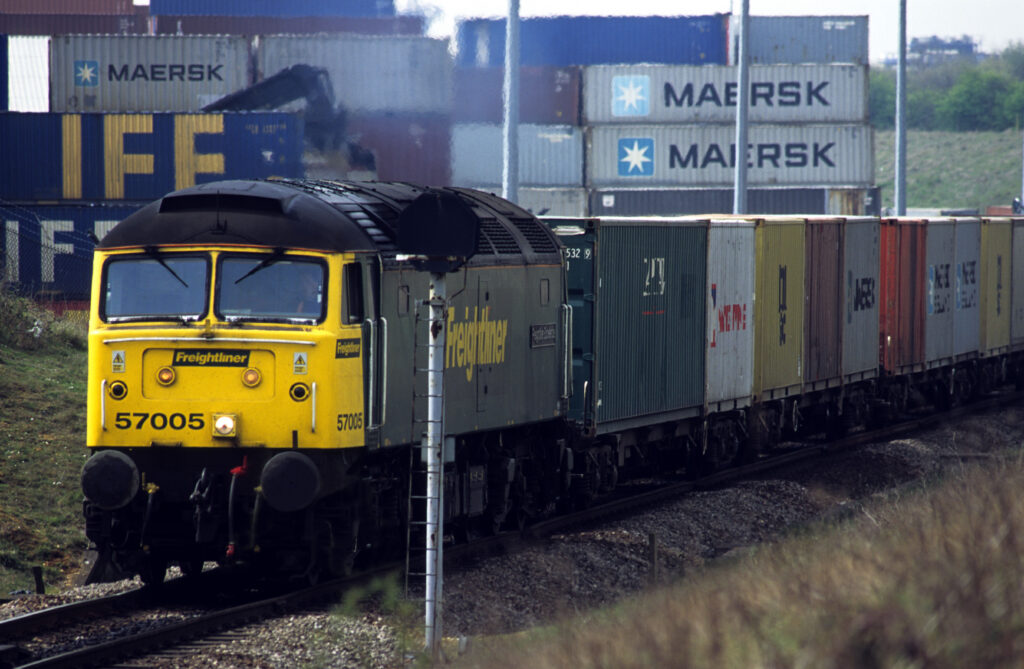
AC7XAK Freightliner freight train, pulling out of the North rail freight terminal, Port of Felixstowe, Suffolk, UK.. Image shot 04/2007. Exact date unknown.

We received an update from the East West Rail Company today which reports on the conversations held with parish councils along the line of the route from Bedford to Cambridge. We also reported on this in a previous post for the sessions held in with parishes close to Cambridge in the Option E area. You can download EWR Co.’s full document below:

It’s a long document but highlights include some new material on the location of Cambourne Station on page 8 ..

“As mentioned, the exact location of new stations has not yet been decided, and we will be working with local authorities and other stakeholders to make sure the locations work for local communities.

We would be open to exploring the possibility of a station in the north of Cambourne.”

and aligning the route with the A428 see page 6 ..

“Specifically, on the A428, we are working with their [Highways England] team to see whether there is a practical way to bring the projects together being mindful that it is not as straightforward as it might seem at first – railways do not like hills or bends and the station stops might not fit well with the needs of road users. However, as mentioned, we will keep talking to our counterparts at the A428 and the other projects across the area to create not just the best rail system, but the best transport system we can.

As previously reported it seems EWR Co. are looking at a route similar to the one we described in this post. It’s nice to see this in a document put out by EWR Co. although there are no commitments yet.

Meanwhile let’s keep up the pressure to avoid the damaging routes in the option E area in favour of ones that work better with the local development plans. See the supporters menu for some ideas of what you can do.

Categories
news

Option E Webinars -Please Register

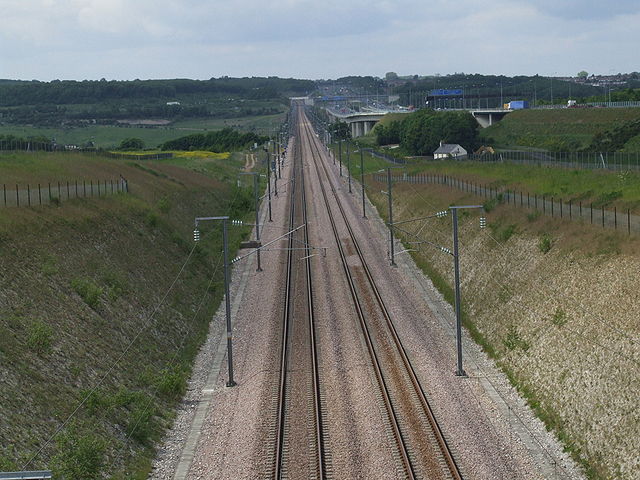
High Speed 1 Line

We published a map of alternative route alignments in EWR’s option E search area. These have been presented to representatives of about twelve local parish councils (Toft, Comberton, Barton, The Eversdens, Harlton, Haslingfield, Harston, Hauxton, Little Shelford, South Trumpington, Great Shelford), some district and county councillors and members of the public. The presentation and discussion has been at an on-going series of meetings, with the aim to reach some consensus about their relative merits and for subsequent presentation to other stakeholders including East West Rail. Note these are not the EWR route alignments, we expect those to appear in January 2021.

We would like to present these routes to interested members of the public and, given the Covid-19 situation, the best way is via webinar. As with the parish councils, the routes will be presented by David Revell of Cambridge Approaches who is a civil engineer with extensive experience with railways and a resident of the area.

The schedule of these webinars is as follows:

We expect the webinars to last about an hour and there will be opportunities to ask questions.

Please click on the links above to register for the webinar date that you would like to attend (the content will be the same in each webinar).

There is a limit to the number of people we can support on each webinar, so it may be good to register early.

*** UPDATE 4/10/2020 ***

If you missed the webinar you can view the presentation given yesterday on this link.

If you are concerned about the route that the railway may take through our area you can help generate awareness by print out this poster and putting it your front window.

Categories
news

Progress Update 2

View North from Money Hill, close to a Railway Cutting being Studied by EWR (see Alternative 3).

Since our last progress update the working group has had two further well attended meetings of the Cambridge Approaches Oversight Group with local parish councils from Toft to the Shelfords. These were to discuss the relative merits of the representative alternative route options presented here. The approach has been to develop an objective assessment of the impact on the different villages and to understand particular issues from each parish. The meeting on the 3rd September was a presentation by David Revell of the different routes. The meeting on the 10th September focussed largely on alternative route 1/1a and the issues as it passes south of Barton and close to the Trumpington Park and Ride area. The 10th September meeting was attended by a BBC journalist.

The meetings continue weekly.

The CA working group met with Bridget Smith the leader of the South Cambridgeshire District Council on the 9th September. She encouraged us to continue and explained various related activities related to the Oxford – Cambridge Arc. She confirmed that EWR will be a freight route from the Felixstowe to The Midlands. (Note that Felixstowe currently handles 48% of UK container traffic.). It emerged that Anthony Browne has come out publicly supporting an EWR station to the north of Cambourne. If this happens, it will have a profound impact on the route options through the option E area. We are actively researching this.

We have sent a second FOI request to EWR focussed entirely on getting the cost benefit analysis that underpinned the Option E decision. We have still not received answers to several outstanding questions, but EWR are saying that they are working on them.

What Can I Do?

If you are interested / concerned about the impact of the new railway as it approaches Cambridge here are some things you can do.

  • Tell your local friends and neighbours about it
  • Contact your parish, district and county councillors and express your views. Given the above process, now is a good time.
  • Write to your MP – Anthony Browne and do the same
  • Comment on this website so others can see your view or email us at info@cambridgeapproaches.org, we will try to respond quickly.
  • ask questions directly to EWR on contact@eastwestrail.co.uk. So far we have seen a 3 month delay in getting answers.
  • subscribe to updates to this site so that we can see the level of interest.
  • Two questions 1) would you be interested in a facebook discussion group? 2) would you be interested in a public webinar to explain the alternative routes in more detail?